
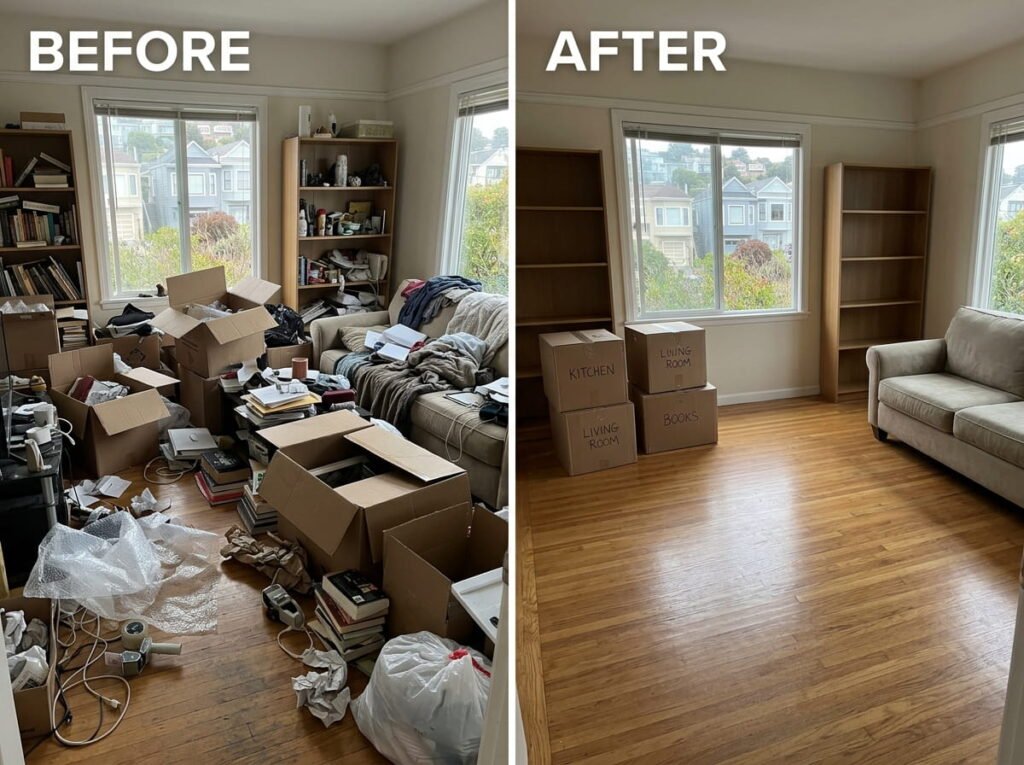
When a loved one dies, you face grief and a house full of belongings at the same time. An estate cleanout Bay Area families take on often feels heavier than it should, because the home holds decades of memories and, in many cases, significant financial value.
You do not have to finish everything this week. You do need a plan, and a good plan protects both your time and your peace of mind. This checklist walks you through the estate cleanout Bay Area homes require, one calm step at a time.
Start With a Pause and a Plan
Before you open a single drawer, take a breath. Most families rush at the start and regret it later. A short pause helps you avoid tossing something important.
Start with three simple questions:
- Who has legal authority to act for the estate?
- Who in the family wants to take part?
- Does a deadline exist, such as a home sale, a lease end, or a probate date?
The answers shape your entire estate cleanout Bay Area timeline. If you are the executor or trustee, confirm your authority in writing before you remove or sell anything. If you have questions about your role, talk with an estate attorney first.
Next, hold a short family meeting, in person or by phone. Agree on who makes final decisions, how you will split sentimental items, and how you will handle disagreements. Siblings often disagree about small things during a loss. A clear process prevents most of those fights.
Finally, walk through the house once without touching anything. Take photos of every room. Those photos protect you if questions come up later, and they help you plan the work.
Step 1: Secure Documents and Valuables First
This step comes before sorting, donating, or hauling. Every estate cleanout Bay Area families complete should begin here, because mistakes at this stage can cost real money and cause real stress.
Lock down the house
Change the locks if former tenants, caregivers, or relatives hold keys. Tell trusted neighbors that the home sits empty, and ask them to watch for strangers. Empty houses attract thieves, and obituaries tell them exactly when to look.
Collect the mail and set up a forward to the executor. Mail often reveals accounts and bills you did not know existed.
Find the important papers
Search methodically, because people hide papers in odd places. Check desk drawers, filing cabinets, closets, freezers, and the pockets of coats. Look for:
- Wills, trusts, and powers of attorney
- Birth, marriage, and death certificates
- Property deeds, mortgage papers, and tax returns
- Bank, retirement, and investment statements
- Life insurance policies and pension records
- Vehicle titles and registration
- Passports, Social Security cards, and military records
- Digital account lists and passwords
Place everything in one locked box or a fireproof bag. Keep it with the executor, and scan each document once you secure it.
Gather valuables
Next, find the items thieves would target or that carry high value. Look for cash, jewelry, watches, coins, firearms, and small collectibles. People in the Bay Area often keep valuables in bedroom closets, kitchen cabinets, and garage tool chests.
Treat firearms with special care. California has strict rules on transferring them, so contact local law enforcement or a licensed dealer before you move any weapon.
Photograph each valuable item and write down where you found it. If the estate involves multiple heirs, this record builds trust and keeps everyone honest.
Shred with care
Do not toss financial papers into a regular recycling bin. Shred or securely destroy any document with account numbers, Social Security numbers, or signatures. Identity thieves actively target the records of people who recently died.
Step 2: Sort Into Keep, Donate, Sell, and Haul
Once you secure the critical items, you can start sorting. Every good estate cleanout Bay Area families finish uses four clear categories. Label four areas of the house, or use colored tape, so everyone follows the same system.
Keep
The keep pile covers items the family wants for sentimental or practical reasons. Photos, letters, recipes, and heirlooms usually land here. Give family members a fair chance to choose. Many families take turns, picking one item at a time, so nobody feels left out.
Do not feel pressure to keep everything. A few meaningful pieces honor a person better than a storage unit full of boxes. If you cannot decide, set the item aside in a “maybe” box and revisit it after two weeks.
Donate
Donation works best for clean, usable items. Good candidates include:
- Gently used clothing and shoes
- Kitchenware and small appliances
- Books and board games
- Working furniture in good condition
- Tools and garden equipment
Many Bay Area charities offer pickup, but each one sets its own rules. Call ahead, because most refuse mattresses, broken furniture, and items with stains or odors. Ask for a donation receipt, since you may claim it on your taxes.
Sell
Some items earn real money. Look for antiques, art, jewelry, vintage furniture, musical instruments, and collectibles. Bay Area buyers pay well for mid-century furniture and quality tools, so a little research pays off.
Get appraisals before you sell anything that might carry high value. A local estate sale company, auction house, or certified appraiser can give you a fair number. Selling online takes time, so decide how much effort you want to invest. A single estate sale can clear many items quickly, and the company usually takes a commission.
Haul
Everything else goes into the haul pile. This category includes broken furniture, old mattresses, expired food, stained carpet, worn-out appliances, and general junk. Heavy and bulky items pile up fast in this category, and they often decide how long your estate cleanout Bay Area project takes.
Do not underestimate the haul pile. A typical family home generates far more trash than people expect, especially garages, attics, and basements.
Work Room by Room
Sorting an entire house at once overwhelms everyone. Instead, tackle one room at a time and finish it before you move on.
Start with the rooms that hold the least emotion, such as the garage, the basement, or the guest room. You build momentum and confidence there. Save the primary bedroom, the home office, and the kitchen for later, once you feel steadier.
Set small goals. Two to three hours per session works better than an exhausting full day. Take breaks, eat real meals, and stop when someone gets upset. Grief shows up unexpectedly during a cleanout, and no one needs to power through it.
Step 3: Handle the Timeline When You Sell the House
Many families sell the home after a death, and that choice puts a clock on the estate cleanout Bay Area process. The Bay Area market moves fast, and a cluttered house sells for less. A realistic schedule protects your sale price.
Here is a timeline that works for most homes:
Eight to ten weeks before listing: Meet with the executor, the attorney, and a real estate agent. Secure documents and valuables. Set the sale date goal.
Six to eight weeks before listing: Sort the house. Complete the keep, donate, and sell decisions, and book any estate sale or appraisal.
Four to six weeks before listing: Run the estate sale. Schedule donation pickups. Arrange for large haul items to leave the property.
Two to four weeks before listing: Clear the remaining items, deep clean, and make small repairs. Your agent can tell you which fixes matter most.
One to two weeks before listing: Stage the home, schedule photos, and walk the property with your agent.
Adjust these steps if probate or a trust sale changes your calendar. If your agent needs the house cleared faster, tell the team early so you can bring in help.
Empty or lightly furnished homes show better in photos, and buyers picture themselves in the space more easily. Clutter hides the best features of the home. A clear house also speeds up inspections and appraisals.
Step 4: Know When to Bring In a Cleanout Crew
Many families handle the whole job themselves, and that works well for small homes. Other families reach a point where outside help makes more sense than pushing through. A professional estate cleanout Bay Area crew can save you weeks of effort and a lot of strain.
Consider hiring help when:
- The house holds a lot. Decades of belongings fill garages, attics, sheds, and storage units.
- Your deadline is short. A listing date, a lease end, or a probate deadline leaves little room for delay.
- You live far away. Many Bay Area heirs live out of state and cannot spend weeks on site.
- The work involves heavy lifting. Pianos, safes, old appliances, and stairs create injury risk.
- The home has hoarding or damage. Safety hazards, pests, and mold require trained crews.
- Emotions run high. Sometimes grief makes sorting too hard, and handing off the haul pile brings relief.
A crew does not replace your decisions. You still choose what to keep, and the team handles the heavy, repetitive work. Good crews follow your sorting rules, treat the home with respect, and recycle or donate items when they can.
When you compare companies, ask a few direct questions. Does the company carry insurance? Does it give a written estimate? How does it handle donations and recycling? Will it separate items you flag for the family? A reputable team answers these questions without hesitation.
If you want to see how a professional team works, read about our property cleanout services. We help families plan every estate cleanout Bay Area homes call for, from a single room to a full house.
Final Thoughts
An estate cleanout Bay Area families face never feels easy, and no shortcut removes the emotion. A clear process, though, lowers the stress and protects what matters most. Secure the documents first, sort with kindness, plan around your sale date, and accept help when you need it.
Take the work in small pieces, and give yourself permission to rest. When you need a steady hand, a trusted crew can carry the heavy load so you can focus on your family.
Frequently Asked Questions
How long does an estate cleanout in the Bay Area take?
It depends on the size of the home and how much it holds. A small apartment may take a few days. A typical family house often takes two to six weeks if you work in short sessions. Large homes, packed garages, and properties with a lot of clutter can take longer. If a sale date or probate deadline limits your time, bring in a crew early so the schedule does not slip.
Do I need to wait for probate before I start?
Not always, but you should confirm your legal authority first. Talk with an estate attorney before you sell, donate, or throw away anything of value. You can usually secure the house, collect important papers, and photograph each room right away. Those steps protect the estate without changing it. Probate rules vary by situation, so get advice that fits your family.
Who decides what happens to the belongings?
The executor or trustee makes the final decisions, following the will or trust. Many families agree on the process together, because shared rules prevent most conflicts. If the documents name specific items for specific people, set those aside before you do anything else.
What should we do first when we enter the house?
Start with security. Change the locks if others hold keys, forward the mail, and tell a trusted neighbor the home sits empty. Then walk through each room and take photos before you move anything. Next, gather wills, deeds, financial records, and insurance papers, and store them in one locked place. Save sorting for after these steps.
How do we handle disagreements between family members?
Set clear rules before you begin. Many families take turns choosing one item at a time, so everyone gets a fair chance. For valuable pieces, get an appraisal and share the results with everyone involved. If tension continues, a neutral third party, such as an attorney or a mediator, can help you reach a decision. Remember that a calm process matters more than any single object.
What items should we never throw away without checking first?
Pause before you discard any of these:
- Papers with account numbers, signatures, or legal language
- Cash, jewelry, watches, and coins
- Old photographs, letters, and family records
- Safe deposit box keys and unmarked envelopes
- Electronics, such as phones and computers, that may hold financial or personal information
People hide valuables in odd places, so check coat pockets, books, freezers, and closets before you haul anything away.
What do we do with firearms, medications, paint, and chemicals?
Treat these items with extra care. California has strict transfer rules for firearms, so contact local law enforcement or a licensed dealer before you move one. Take unused medications to a pharmacy or a collection site that accepts them. Bring paint, solvents, batteries, and similar products to your county’s household hazardous waste program. Never put these items in the regular trash.
Should we hold an estate sale, donate, or haul everything away?
Use all three, depending on the item. Sell pieces with real value, such as antiques, art, jewelry, and quality furniture. Donate clean, usable items to local charities, and call ahead to confirm what each one accepts. Haul away broken furniture, worn mattresses, expired food, and general junk. An appraiser or an estate sale company can help you decide which category fits each higher value item.
Can we manage an estate cleanout from out of state?
Yes. Many Bay Area families live far from the home they need to clear. A video walkthrough lets you point out what to keep, and a professional crew can handle the sorting, hauling, and cleaning while you stay in touch by phone or email. Ask the crew for photos of any item you flag, and request a written summary when the job ends.
How much does a professional estate cleanout cost?
Pricing depends on the amount of material, the access to the home, and the type of items involved. Stairs, long carries, heavy furniture, and hazardous materials can raise the price. Ask for a written estimate after the company sees the property, and confirm what the quote includes. Also ask about insurance, donation handling, and recycling practices.
When does it make sense to hire a cleanout crew?
Consider help when the house holds decades of belongings, your deadline leaves little room, you live far away, or the work involves heavy lifting. Hire a crew too if the home has safety concerns, such as pests, mold, or severe clutter, or if the emotional weight makes sorting too hard. You still make every decision about what to keep, and the crew handles the heavy work. Learn more about our property cleanout services if you want to see how a professional team supports a family through the process.
What if we feel overwhelmed?
That reaction is normal. Work in short sessions, start with the rooms that hold the least emotion, and stop when you need a break. You do not have to finish everything quickly, and you can ask for help at any point. A clear plan and the right support make the job manageable.