
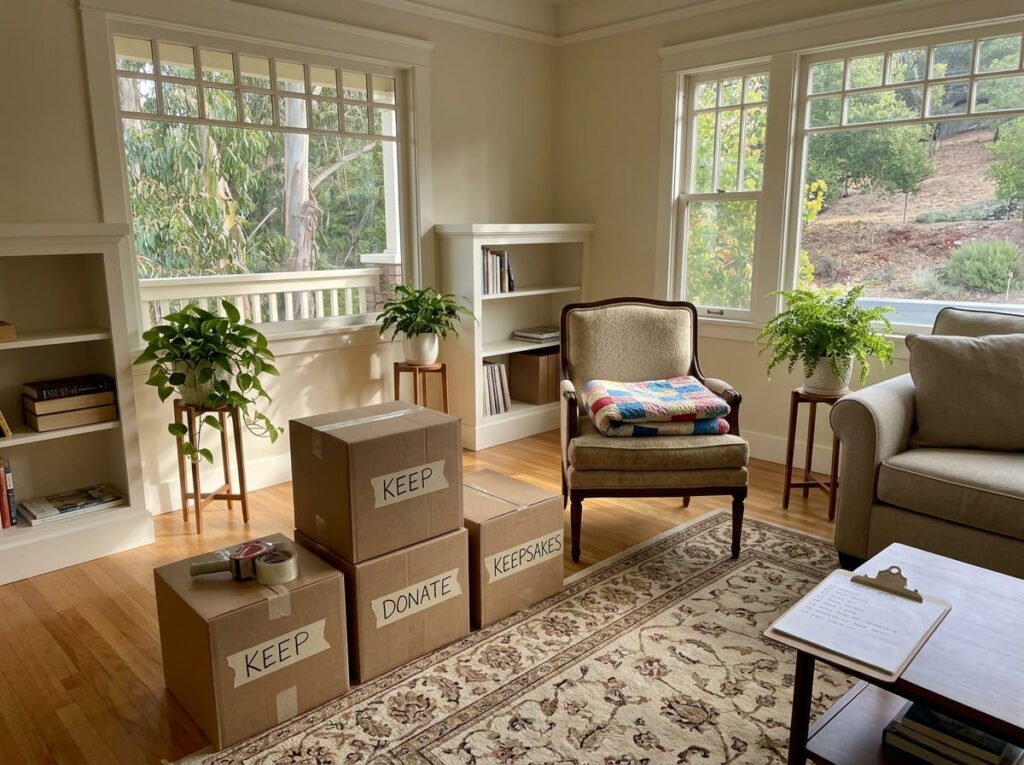
Moving costs a lot in the Bay Area, and every box you pack adds to the bill. The smartest way to cut that bill is simple: own less stuff on move day. When you declutter before moving Bay Area households save money, time, and energy.
This guide shows you why fewer items lower your costs, how to sort each room, and when to start. You will also learn how to keep, donate, and haul items without losing a weekend to the process. If you plan to declutter before moving Bay Area style, this plan gives you a clear path.
Why Fewer Items Mean a Lower Moving Cost
Moving companies charge in a few ways, and almost every pricing method rewards a lighter load. Here is how a smaller load saves you money.
Local movers charge by the hour. Most local moves in the Bay Area use hourly rates for a crew and a truck. More furniture and boxes mean more loading time, more driving, and more unloading. Cutting 20 percent of your belongings can shave hours off the job.
Larger loads need larger crews and trucks. A one bedroom apartment needs less than a four bedroom house. If you reduce your volume, you may qualify for a smaller crew or a smaller truck.
Packing takes time and materials. Boxes, tape, bubble wrap, and padding all cost money. If you pay for packing help, every item adds to the labor charge.
Bay Area logistics raise the stakes. Tight parking in San Francisco, steep stairs in Oakland, and long carries in dense neighborhoods slow movers down. A smaller load moves through those obstacles faster.
Storage costs add up. If you downsize, you may rent a storage unit. Bay Area storage prices run high, so paying monthly to store items you never use makes little sense.
Put simply, you pay to move every item you own. Ask yourself a hard question about each one: would you pay money to carry this to a new home? If not, let it go.
The Hidden Benefits of Decluttering
Money matters, but it is not the only reason to declutter before moving Bay Area residents should consider.
- A faster unpack. You open fewer boxes, so your new place feels like home sooner.
- Less stress. Smaller piles make decisions easier.
- Safer packing. Fewer items means less damage and fewer lost things.
- A fresh start. You arrive with only the belongings you actually use.
- Better use of your space. Your new home may have a different layout, and a lighter load fits it better.
When to Start: The 1 to 2 Week Rule
Timing shapes how well your plan works. For most households, the best window to finish clearing out falls 1 to 2 weeks before move day. That gap gives you enough time to arrange donations, schedule a haul, and pack the remaining items without panic.
Here is a simple timeline to declutter before moving Bay Area households can follow:
Four to six weeks out: Walk through your home and set goals. Decide your move date, book your movers, and start with the largest, easiest items.
Three to four weeks out: Begin sorting seldom used spaces, such as the garage, attic, storage closet, and guest room.
Two to three weeks out: Finish the main sort. Schedule donation pickups and book a junk removal crew for the haul pile.
One to two weeks out: Clear out everything you plan to donate, sell, or haul. Start packing the keep pile.
Move week: Pack the daily essentials, confirm details with your movers, and clean.
If your move date sneaks up on you, do not worry. Even a few days of focused effort will lower your costs. Start with bulky items, because they have the biggest effect on your price.
The Keep, Donate, Haul System
A clear system keeps you moving. Set up three zones in your home, and label each one.
Keep: Items you use, love, or need in your new home.
Donate or sell: Items in good shape that someone else can use.
Haul: Broken, worn out, or unusable items that belong in the trash or recycling.
Use one rule for every item. If you have not used it in a year, and it holds no strong sentimental value, it probably goes in the donate or haul pile. Apply this rule to everything you own when you declutter before moving Bay Area apartments and houses.
Room by Room Plan
Take on one room at a time. Finish each space before you start the next. This method keeps you from creating a bigger mess than you started with.
Garage and storage areas
Start here, because these spaces hold the most forgotten items. Garages collect old paint, broken tools, spare furniture, and boxes you never opened.
- Toss any item you have not touched in two years.
- Sell or donate working tools, sports gear, and bikes.
- Haul broken equipment and furniture.
- Dispose of paint, chemicals, and batteries at a proper hazardous waste site. Alameda County and other Bay Area counties run household hazardous waste programs.
Kitchen
Kitchens hold more clutter than most people expect. You can cut the load quickly here.
- Pull out duplicate utensils, mismatched containers, and unused gadgets.
- Check the pantry and toss expired food.
- Donate unopened, nonperishable items to a local food bank.
- Keep only the cookware and dishes you use weekly.
- Pack the rest in a box and ask yourself, after a month, whether you missed it.
Living room
- Donate extra chairs, side tables, and decor.
- Sort books, and keep only the ones you will read again.
- Haul broken furniture or items that will not fit your new space.
- Measure large furniture against your new floor plan before you decide to keep it.
Bedrooms
- Pull every piece of clothing off the hangers and shelves.
- Keep what you wear, and donate what you have not worn in a year.
- Check closets, under beds, and in dressers for hidden items.
- Replace old mattresses at your new home instead of paying to move a worn out one.
Bathrooms
- Throw away expired medicine, makeup, and old toiletries.
- Recycle empty bottles.
- Keep only what you need for the last week in your current home.
Kids’ rooms
- Involve your children in sorting, because they often feel proud to help.
- Donate outgrown toys, clothes, and books.
- Toss broken toys and incomplete sets.
- Keep a small box of favorites for each child.
Home office
- Shred old paperwork and recycle the rest.
- Scan important documents and store them digitally.
- Donate or recycle old electronics through a certified e-waste program.
- Pack tax records and legal documents separately and carry them with you.
Closets, hallways, and entryways
These spaces gather coats, shoes, bags, and cleaning supplies. Sort them quickly and keep only the essentials.
What to Do With the Donate Pile
Donating feels good, and it keeps usable items out of landfills. Plan the donation step early so it does not become a last minute scramble.
- Call local charities and ask what they accept.
- Schedule pickup if the organization offers it.
- Keep your receipts for tax purposes.
- Drop off smaller loads on your way to errands.
Charities refuse many items, including broken furniture, mattresses, and anything with stains or odors. Do not hold onto those items hoping someone will take them. Move them to the haul pile and keep going.
What to Do With the Haul Pile
The haul pile frustrates most people, because it usually includes the heaviest and most awkward items. Old sofas, broken desks, worn mattresses, and piles of boxes do not fit in a car.
You have a few choices:
- Rent a truck and make multiple trips to the transfer station.
- Use your city’s bulky pickup program, if it fits your schedule.
- Hire a professional crew to load and remove everything in one visit.
When you declutter before moving Bay Area deadlines often leave little room for slow options. Dump runs eat up a Saturday, and city pickup may not arrive before your movers do. A junk removal crew can clear the whole pile in one stop, so you can focus on packing. Learn more about our junk removal services to see how a same day or next day haul works.
Hiring Movers After You Declutter
Once you clear the extra items, you can request an accurate moving quote. Movers estimate costs based on the size of your load, so a lighter inventory gives you a lower number. Always get quotes after you finish your major sort, not before.
Look for a company that offers clear pricing, carries insurance, and knows the Bay Area well. Local experience helps, because crews who know the streets, the parking rules, and the building requirements move faster. If you want a team to handle the heavy lifting, explore our local moving services and ask for a quote based on your slimmed down load.
Pairing the two services gives you a smoother day. Your haul crew clears the unwanted items first, and your movers load only what you plan to keep. You skip the confusion of moving things you do not want.
A Simple Moving Day Checklist
Keep this list close as the date approaches:
- Set your move date and book your movers.
- Walk through each room and set a decluttering goal.
- Sort every room into keep, donate, and haul.
- Schedule donation pickups.
- Book a junk removal crew for 1 to 2 weeks before move day.
- Dispose of hazardous items at the proper site.
- Pack the keep pile and label every box.
- Pack a box of essentials for the first night.
- Confirm your move details with your movers.
- Do a final walk through for missed items.
Tips to Stay on Track
Set a daily goal. Clear one drawer, one shelf, or one closet each day. Small steps add up quickly.
Use a timer. Set 30 minutes, and sort as much as you can before it rings.
Avoid the “maybe” trap. If you hesitate, ask whether the item fits your new home. If not, let it go.
Start with easy wins. Clearing obvious junk builds momentum for harder choices.
Take photos of sentimental items. A picture keeps the memory without the storage space.
Ask for help. A friend can offer a fresh perspective and keep you moving.
Common Decluttering Mistakes
Waiting until the last minute. Rushed decisions lead to regret and higher costs.
Packing first and sorting later. You pay to move items you plan to toss.
Ignoring the garage. Garages often hold the heaviest loads.
Keeping duplicates. Two blenders and three can openers waste space.
Forgetting the new floor plan. Furniture that fit your old home might not fit the next one.
Frequently Asked Questions
How early should I declutter before moving Bay Area style?
Start four to six weeks before move day if you can. Aim to finish your haul and donations 1 to 2 weeks before the move.
Will decluttering really lower my moving quote?
Yes. Fewer items mean less loading time, smaller trucks, and lower hourly totals.
Should I sell or donate my extra furniture?
Sell it if you have time and the item holds good value. Donate it if you need it gone quickly.
Can one company handle both my haul and my move?
Yes. Working with one provider for both services often simplifies scheduling and saves you time.
Final Thoughts
Moving costs real money, and the Bay Area makes it more expensive than most places. The easiest way to take control is to declutter before moving Bay Area deadlines arrive. Sort room by room, donate what others can use, haul what you cannot, and finish 1 to 2 weeks before move day.
When you arrive with fewer boxes, you pay less, unpack faster, and start fresh in your new home. If you want help with the haul or the move itself, a local team can handle both so you can focus on what comes next.