
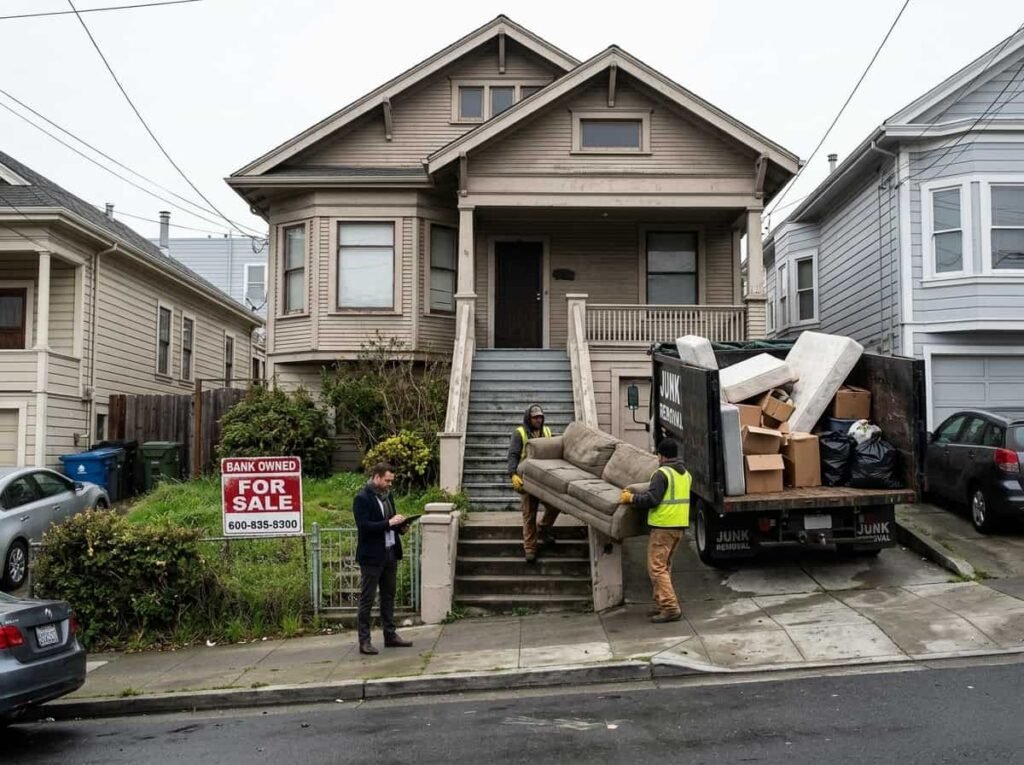
Foreclosure cleanout Bay Area jobs carry more risk than a normal junk haul. The property often sits vacant, the former occupants may have left in a hurry, and state and city rules start to apply the moment the bank takes title. A fast, documented cleanout protects the asset, keeps the city off your back, and gets the listing photos ready. This guide covers what California law requires, what Oakland adds on top, and how to run a trash out that holds up if anyone asks questions later.
Quick Answer
After a foreclosure sale, the new legal owner must maintain the vacant home under California Civil Code Section 2929.3. Cities can fine owners up to $2,000 per day for the first 30 days and up to $5,000 per day after that. In Oakland, foreclosed homes must also register with the city. Clear tenants and personal property lawfully first, then remove debris, secure the home, and photograph everything. A good foreclosure cleanout Bay Area plan follows the law first and hauls the trash second.
What Makes a Foreclosure Cleanout Different
A standard cleanout starts when an owner says “take it all.” A foreclosure cleanout starts with questions. Who still has rights to the home? Who owns the items inside? Which agency inspects the property next week?
Asset managers and listing agents usually call this work a “trash out.” The scope often includes:
- Removing furniture, trash, and debris from every room, the garage, and the yard
- Emptying the refrigerator and food storage
- Clearing exterior junk, yard waste, and abandoned vehicle parts
- Basic broom sweep cleaning so the home shows well
- Photo documentation before, during, and after
Each foreclosure cleanout Bay Area crew should treat the house as a file, not just a job.
California’s Maintenance Rule for Foreclosed Homes
California Civil Code Section 2929.3 says the legal owner must maintain vacant residential property bought at a foreclosure sale or taken back through foreclosure. “Failure to maintain” covers conditions like trash buildup, overgrown yards, stagnant pools, and open doors that let squatters in.
A city or county must send notice and give the owner time to fix the problem before it fines anyone. If the owner misses that window, fines can reach $2,000 per day for the first 30 days and $5,000 per day after that. The owner also gets a chance at a hearing.
For a bank or investor holding several properties, those numbers add up fast. An early foreclosure cleanout Bay Area crew removes one of the most common triggers for a blight complaint.
Oakland’s Foreclosed Property Registration Program
Oakland goes further than state law. Under Oakland Municipal Code Chapter 8.54, owners of foreclosed homes and properties in default must register with the city and pay a yearly fee. The city treats the data as public.
Key points for asset managers and agents:
- Self inspections. The owner or agent must inspect the property and report findings through the registration system. City guidance calls for weekly inspections of vacant bank owned homes.
- Local management. If the owner sits more than 20 miles away, the city expects a local property management company to handle inspection, security, and maintenance.
- Occupied homes. Tenants who live in a foreclosed home keep their rights, and the owner must follow Oakland and California landlord tenant laws.
Debris and open access show up fast on these inspections. A foreclosure cleanout Bay Area crew sent right after title transfer gives you a clean first report.
Clear Tenants and Occupants the Right Way
You cannot clean out a home that someone still lawfully occupies. California Code of Civil Procedure Section 1161b protects tenants in foreclosed properties.
- Month to month tenants must get at least 90 days of written notice before removal.
- Tenants with a fixed term lease signed before the foreclosure sale can usually stay until the lease ends. The new owner can end the lease early with 90 days of notice only in limited cases, such as when the buyer will live in the home as a primary residence.
- The former owner who stays in the home does not get these tenant protections.
Many banks offer a “cash for keys” deal, where the occupant agrees to leave by a set date and leave the home broom clean in exchange for a payment. Put the terms in writing.
Handling Personal Property After Occupants Leave
Former occupants often leave furniture, clothes, photos, and paperwork behind. The same rule from rental turnovers applies here. California Civil Code Sections 1980 through 1991 set the notice process for property left behind by a former tenant, and Code of Civil Procedure Section 1174 covers property left after a sheriff lockout.
In plain terms:
- Send a written notice describing the property and where to claim it.
- Wait at least 15 days after hand delivery or 18 days after mailing.
- If the total value seems under $700, you may dispose of it after the deadline. Higher value property goes to public sale.
Store family photos, documents, and keepsakes safely until the deadline passes. These items cause the most complaints. Get your own attorney’s sign off on the process, since this article offers general information and not legal advice.
The Foreclosure Cleanout Checklist
Use this foreclosure cleanout Bay Area checklist on every REO property.
Before the Crew Arrives
- Confirm title transfer and occupancy status
- Confirm notice periods have ended
- Order a lock change or rekey
- Get utilities status (water, power) for safe work
During the Cleanout
- Photograph each room before removal
- Set aside valuables, documents, and photos for storage
- Separate hazardous waste: paint, motor oil, pool chemicals, batteries
- Remove all debris from interior, garage, attic, and yard
- Check for needles, mold, pests, or sewage and stop if found
After the Cleanout
- Broom sweep every room
- Photograph each room from the same angles
- Secure doors, windows, and gates
- Report results in the Oakland registration system if required
- Send photos to the asset manager
In Alameda County, residents can drop off household hazardous waste for free at county facilities, including 2100 East 7th Street in Oakland. Banks and businesses use a separate fee based program, so plan for that cost.
What Realtors Should Ask a Cleanout Company
Before you hire anyone for a foreclosure cleanout Bay Area property, ask:
- Do you hold an active business license in the city where the home sits?
- Will you send dump receipts? The City of Oakland tells owners to ask for them, since illegal dumping can come back on the property owner.
- Do you take dated before and after photos?
- How do you handle personal items, documents, and photos?
- Can you work around lockbox access and send updates without an agent on site?
- How fast can you start, and how long will the job take?
A clear yes on each question tells you the crew understands REO work, not just junk hauling.
Common Mistakes on Bank Owned Cleanouts
Most problems on a foreclosure cleanout Bay Area job come from rushing the legal steps. Watch for these:
- Clearing a home before the notice period ends. A former occupant can claim you threw away their property.
- Tossing paperwork. Old mail, tax records, and IDs can contain private data. Shred them or hold them for the owner of record.
- Skipping dump receipts. Without them, you cannot prove the debris went to a legal site.
- Ignoring the yard. Overgrown weeds and piles outside draw blight complaints even when the inside looks clean.
- No photos. Without dated images, you have no proof of the home’s condition on the day the crew left.
Why Speed Matters for Bank Owned Listings
A cluttered foreclosure photographs badly and sits longer. It also draws trespassers, pests, and neighbor complaints. Every week that passes adds holding costs: insurance, utilities, HOA dues, and inspection time.
A quick foreclosure cleanout Bay Area turnaround lets the agent order photos, start repairs, and list sooner. It also gives the broker a clean property to show for a broker price opinion, which affects the list price.
How Junk Relief Squad Supports Realtors and Banks
Junk Relief Squad handles property cleanouts across Oakland, Berkeley, Alameda, San Francisco, Walnut Creek, Hayward, Concord, San Jose, and Palo Alto. Our crew assesses the home on site and gives upfront pricing before work starts. We load, haul, recycle, and donate whenever we can, and we leave the space clean.
We often schedule same day or within 24 to 48 hours. We work Monday through Saturday, 7 AM to 8 PM, from our base at 1999 Harrison Street in Oakland. Call (800) 749-8706 to book a foreclosure cleanout or request a free quote.
Frequently Asked Questions
1. What is a foreclosure cleanout in the Bay Area?
It is the removal of trash, furniture, and debris from a home after a foreclosure, so the bank or new owner can secure, repair, and list it. Agents and asset managers often call it a trash out.
2. Who pays for a foreclosure cleanout in California?
The legal owner after the sale pays, which is usually the lender or the investor who bought the home at auction. Listing agents often coordinate the work for bank owned properties.
3. What fines can a California city charge for a neglected foreclosed home?
Under Civil Code Section 2929.3, a city or county can fine the owner up to $2,000 per day for the first 30 days and up to $5,000 per day after that, once the owner misses the deadline to fix the problem.
4. Do foreclosed homes in Oakland need to register with the city?
Yes. Oakland Municipal Code Chapter 8.54 requires owners of foreclosed and defaulted residential properties to register, pay a yearly fee, and complete regular self inspections.
5. How much notice do tenants get after a foreclosure in California?
Month to month tenants get at least 90 days of written notice under Code of Civil Procedure Section 1161b. Tenants with a fixed term lease can usually stay until the lease ends.
6. Can a bank throw away items left in a foreclosed home?
Not right away. California law requires written notice to the former occupant and a waiting period of at least 15 days after hand delivery or 18 days after mailing before disposal.
7. What is cash for keys?
Cash for keys is an agreement where the lender pays the occupant to leave by a set date and leave the home in clean condition. It often saves time compared to a formal eviction.
8. How fast can a foreclosure cleanout start in Oakland?
Junk Relief Squad often books same day or within 24 to 48 hours, depending on availability. The home must be clear of occupants and past any legal notice period first.
9. What items need special disposal during a trash out?
Paint, motor oil, pool chemicals, pesticides, batteries, and electronics need special handling. Needles, mold, or sewage call for a licensed biohazard or remediation company.
10. Why should a bank ask for before and after cleanout photos?
Dated photos prove the crew cleared the home. They support Oakland self inspection reports, protect the owner in a blight dispute, and show the home’s condition for the broker price opinion and listing.